How condoms are made and tested?
Condoms are becoming increasingly important with the increasing awareness of sexual health to prevent diseases and family plans. Natural latex condom has been widely accepted and dominates the mainstream market.
How condoms are made and tested? Here we will lead you to understand how premium quality condom are produced and tested by Shandong Ming Yuan Latex Co., Ltd.
Step 1 : Glass former & Latex mixing
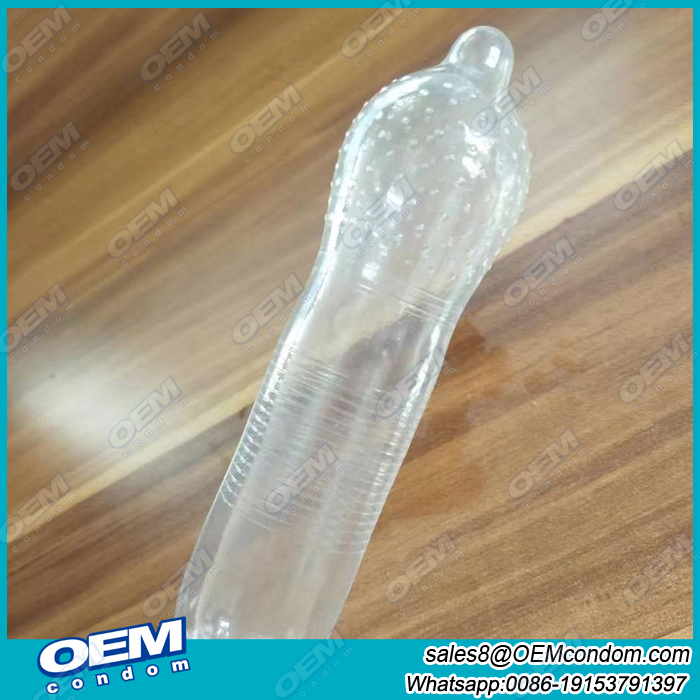
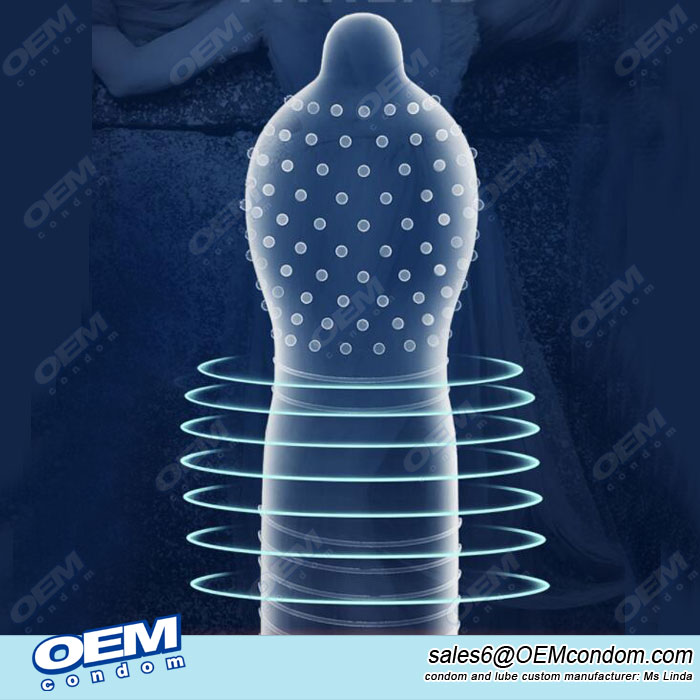
Glass former: The dipping glass mold shaped like the final condom, is the first step to shape the condoms, these are essential tools that serve as reusable mold in manufacturing of latex condoms. Typically made from borosilicate glass to withstand repeated cycles of heating, cooling and latex dipping without deforming. Specialized formers with ribs or studs create textured condoms, this is where we create fun and pleasurable styles of condoms.
Raw material: Liquid latex is prepared by mixing with water and other chemicals according to strict specification. All compounds need to be ground evenly before adding. This mixture is pumped to mixing tanks for formulation under 54 degree Celsius and lasts for 12-13 hrs. The mixture is then transferred to supply tanks where remain 18-20 degree Celsius.
Step 2: Dipping Line
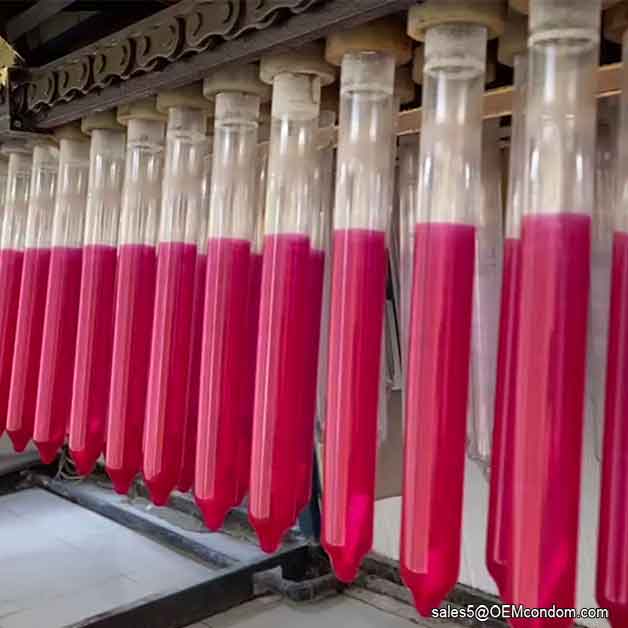
Clean and dip the mold: A continuous line of cleaned glass formers are dipping into a tank of mixed liquid latex to create a thin, uniform film on the surface. They are mounted on a continuous chain, often in double rows for efficiency.
Dry and Re-Dip: The first layer of film is dried in an industrial oven, cooled, and then dipped again. This process is repeated three times with each dip and drying cycle to achieve the required strength and desired thickness for condoms. (typically 0.06-0.08 mm thick for standard condoms).
Step 3: Beading & Stripping
Beading station: After the final dipping and drying, the formers move to a beading station, where a rim is created at the open end of the condom for easier application
After all the finishing processes, the condoms are stripped off from the molds using water jets, and washed to remove residual chemicals. At the same time, powders are usually added to reduce the stickiness of the condom and play a role in preventing adhesion and isolation.
Step 4: Vulcanization
After the condoms are formed, they are placed in a high-temperature oven (about 100-120 degrees Celsius) to vulcanize the latex, making it more elastic and stronger.This is a key chemical process that ensures the condom’s strength and elasticity, and is crucial to its durability.
Condoms are manufactured in batches. Random samples are taken from each batch of condoms for testing. These tests include: Electronic pinhole test, Air burst test, Dimensional test, Water leak test, Tensile test and packaging test.
Step 5: Quality Testing
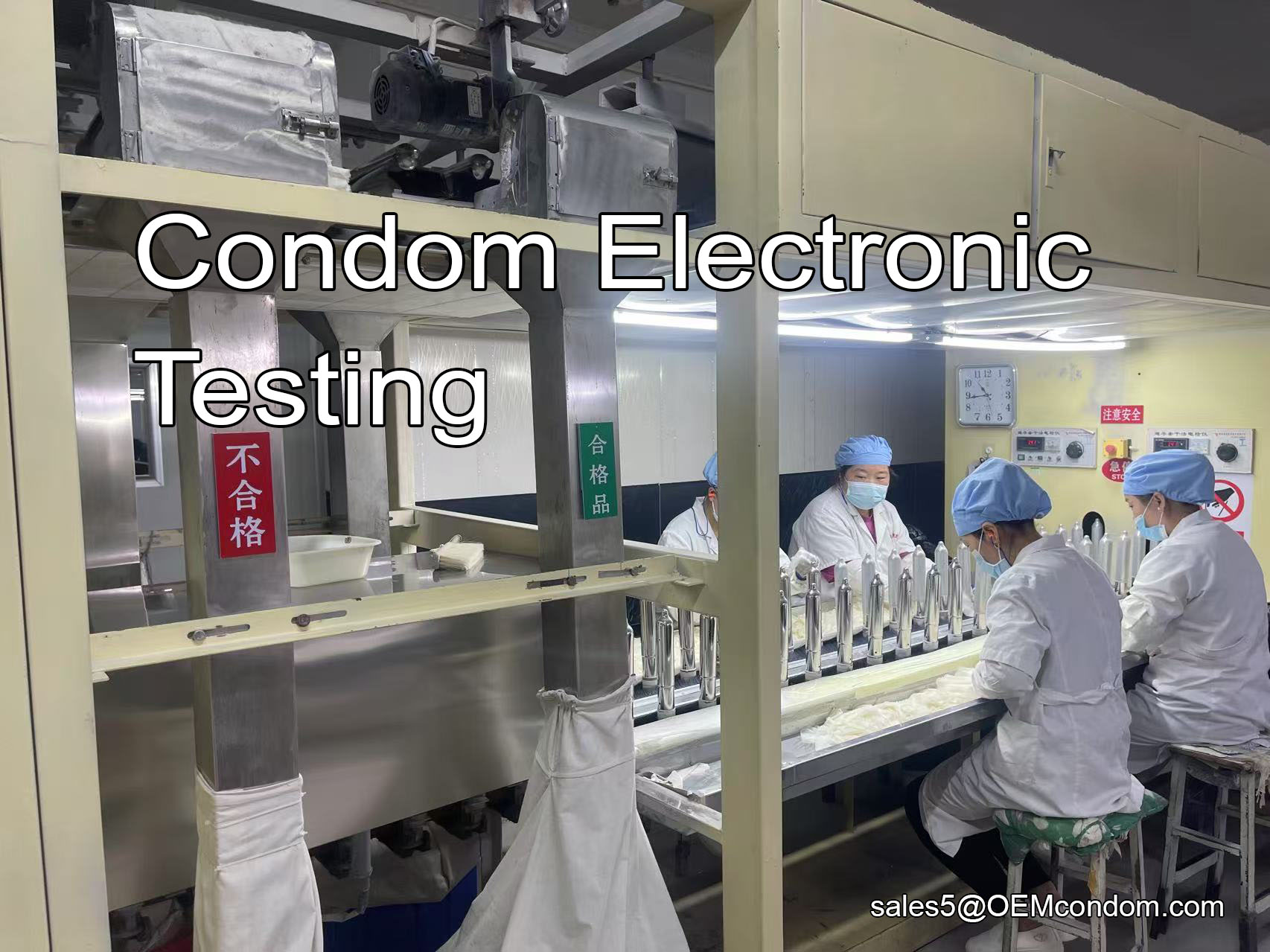
1. Electronic test: Each condom will be placed over a metal mandrel and exposed to an electrical field. Electricity will pass through pinholes to determine whether there is electric conduction. Rubber does not conduct electricity. If electricity reaches there mandrels, it indicates that there is a pinhole or tiny tear in the condoms. Any defective condoms will be automatically discarded.
2. Air Burst Test: Condom samples are randomly selected from each batch and inflated with air until they burst. Its volume and pressure are recorded when a sample breaks. If condoms do not meet international standards, the entire batch will be discarded
3.Dimensional Test: A condom dimension test is conducted by measuring the length,width and thickness of condoms, to verify the condoms comply with international standards, such as ISO 4074. Any condom that does not meet the standards will be discarded.
4.Water leak test: Random samples taken from each batch production, will be filled with 300ml of water to inspect leaks automatically. Any water leaks or seep out detected by pinhole lead to batch rejection.
5.Tensile Test: Condoms are usually cut into standard shapes, such as rings or strips. This is crucial to ensure the condom can withstand the physical strain during use., like a ring or strip. Lay the condom flat, use the special equipment to pull and stretch until it breaks.This is critical to ensure condoms can withstand physical stress during use.
6.Package Integrity Test: Random sealed condoms are subjected to a vacuum, automated systems to create a pressure difference inside and outside of condom packaging. Its integrity will be detected by the escape of air bubbles. Failure results in batch rejection.
Step 6 : Lubricated & Foil Wrapped
Condoms are automatically fed from the production tray into the machine for lubrication. After adding lubricant, each condom is placed in a foil wrapper and tightly sealed to ensure its integrity. Individual packages or multi-pack strips are automatically cut and sorted into boxes or cartons.
Step 7 : Packaging
Condoms are individually lubricated and packaged and will be available in various packaging methods.
This is the Customization Stage:
Different packing rates, such as 3 pieces/box, 10 pieces/box, etc. Or bulk packing without a box.
Different designs: can be customized according to customer requirements.
This is not a fixed rule, we can assist customers to achieve any packaging for OEM condom brand production as long as they share ideas with us. If you are currently in the process of launching a condom brand in your market, we are able to help you to produce premium quality condoms for your market entry.
Please feel free to contact us through the following methods.